

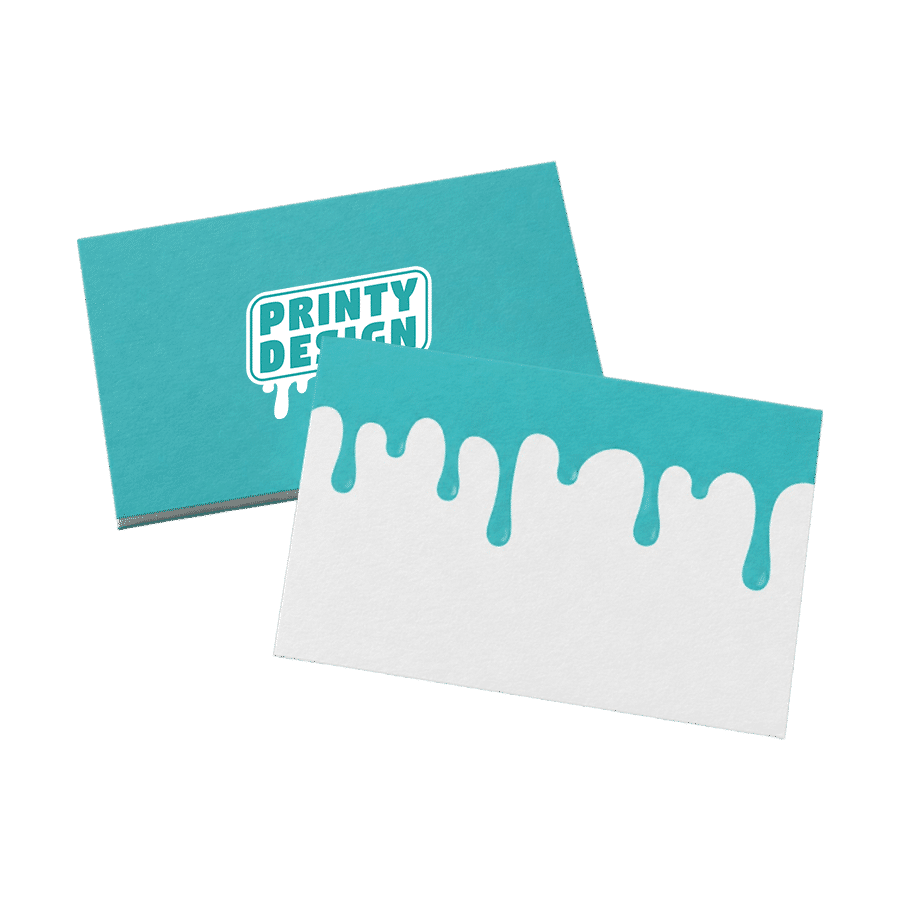
Quick test: pull a business card and a bank card out of your wallet right now. Same size, aren’t they? That’s not a coincidence, and it’s not a rule some printer invented to sell you a specific product. It’s just what a business card in the UK has settled on being, for reasons that turn out to be entirely practical once you think about it for more than four seconds.
The size: 85mm × 55mm
That’s the standard. It’s the same footprint as a UK bank card or driving licence (technically the ID-1 format, if you want the proper name for it), and that’s precisely why it works — it fits in the card slot of a wallet that already exists to hold cards that exact size. Nobody has to make room for it. It just slots in next to everything else that’s already there, which is a big part of why a card that size gets kept rather than binned.
Go noticeably smaller and it rattles around loose in a pocket. Go noticeably bigger and it doesn’t fit the wallet slot at all, which means it lives in a bag, or a drawer, or — more likely — the bin, because the entire point of a business card is that it survives the ten seconds between “here’s my card” and “where do I put this.”
Why the standard beats “different for the sake of different”
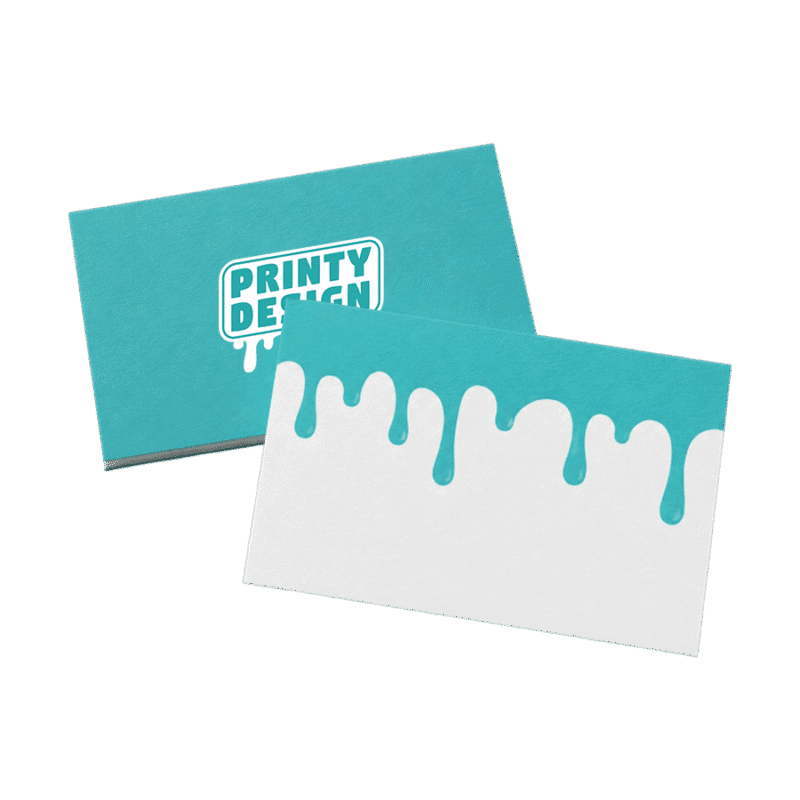
There’s a version of this conversation where someone suggests a novelty shape or an oversized card to stand out. Sometimes that’s genuinely the right call for a specific brand — a photographer, an event, a one-off promo piece. But for the card that’s meant to end up in someone’s actual wallet, alongside their actual bank cards, “fits the slot” beats “looks unusual” almost every time. Standing out is what the design is for. The size just needs to survive contact with real life.
Where the actual differentiation happens
If size isn’t where you compete, stock and finish are. This is where a card goes from “fine” to “I remember getting that.” A few things worth actually thinking about:
Stock weight. We print on 350gsm Recycled, 400gsm Silk, or 450gsm Silk. Heavier stock has genuine presence — it doesn’t flex or bend the way a thinner card does, and that rigidity is part of what reads as quality before anyone’s even looked at the design.
Coating. No coating gives you a natural, tactile finish that takes a pen mark well (useful if people are meant to write a number on the back). Gloss lamination makes colour and photography pop. Matt lamination is the quiet, premium-feeling option most design-led brands reach for. Velvet lamination goes further still — a soft-touch finish people notice with their thumb before they’ve read a word.
Corners. Square corners are the sharp, standard default. Round corners are a small detail that changes how a card feels in the hand, and they’re surprisingly effective at making a card look considered rather than default.
Sides. Single-sided keeps things clean and minimal. Double-sided gets your English side and, say, a translated or secondary-language side — or just more information — without needing a second card.
The honest advice
Stick to 85mm × 55mm unless you have a specific, deliberate reason not to — a reason that’s about the card’s purpose, not just wanting to be different. Spend your differentiation budget on stock, coating, and finish instead, where it actually gets felt every time someone pulls the card back out of their wallet. That’s the bit people remember, even if they couldn’t tell you why.
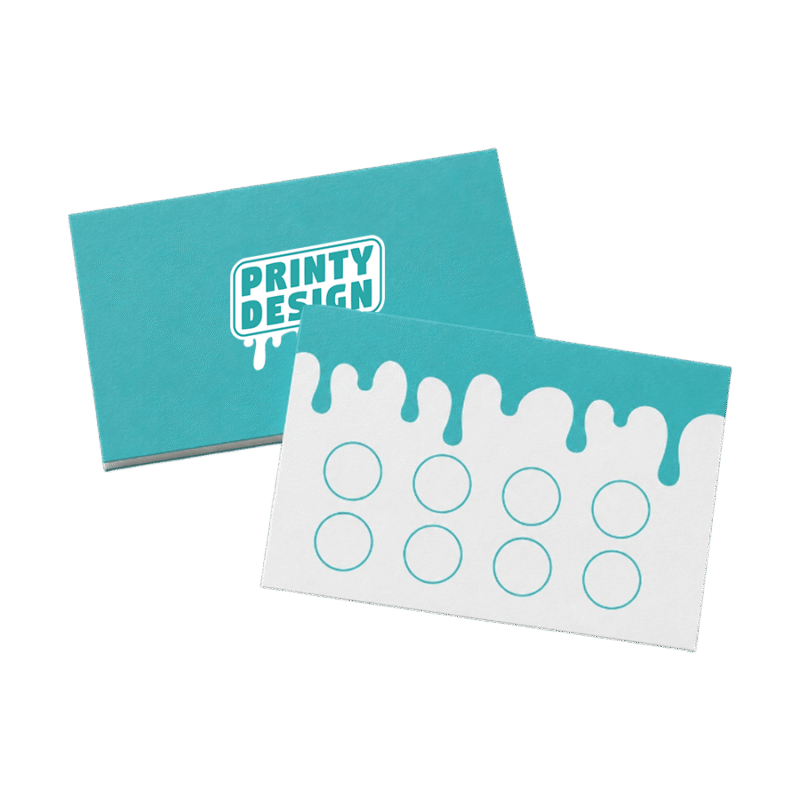
Sorting the loyalty side of things too? The same size and finish options apply to our loyalty cards — same pocket-friendly format, built for a different job. Or head straight to business cards to build yours from 100 up to 6,000, in whichever stock and finish actually fits the brand.