
Here’s a sentence nobody wants to hear after paying for print: “we went with the biggest one because bigger felt safer.” Size isn’t a confidence stat. It’s a decision that should depend entirely on where the flyer’s going to live and what it’s meant to do once it gets there — and in the UK, you’ve actually got a proper, sensible range to pick from, not just “flyer-sized” as a vague concept.
Here’s what each size is actually for, sorted from smallest to biggest.
A7 — 74 × 105mm
Basically a large business card. Too small for much copy, which is exactly the point — a headline, a QR code, a date, a logo. Works well as a till-point takeaway or tucked into a bag at checkout, somewhere it needs to survive being handled without feeling like clutter.
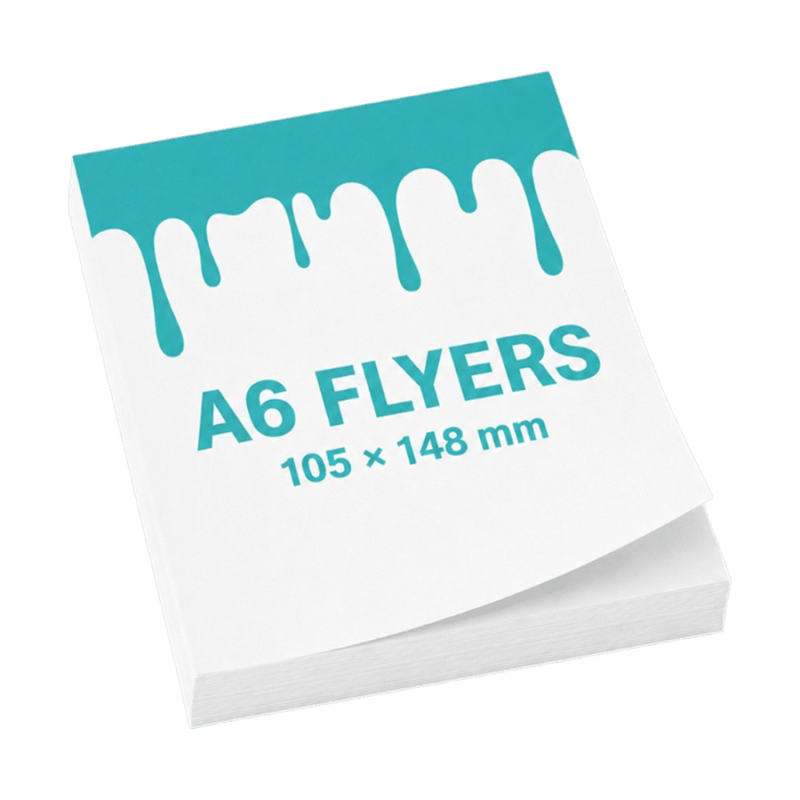
A6 — 105 × 148mm
The postcard size, and genuinely one of the most useful formats going. Big enough for a real message and a decent image, small enough to hand someone on the street without them treating it like a chore. This is the size most “flyering” in the traditional sense actually uses.
DL — 99 × 210mm
The long, thin one — same width as a standard envelope, which is exactly why it exists. If this is going through a letterbox, in an envelope, or standing in a countertop display rack, DL is built for that job specifically. It’s also a genuinely good menu or price-list format, because the shape naturally suits a list.
A5 — 148 × 210mm
The generalist. Enough space for a proper offer, some detail, a bit of design breathing room, while still being pocketable and cheap enough to print in real volume. If you’re not sure which size to pick and the flyer needs to do a bit of everything — event promo, menu, service overview — A5 is the safe, sensible default, and there’s a reason it’s usually the highest-volume size any printer sells.
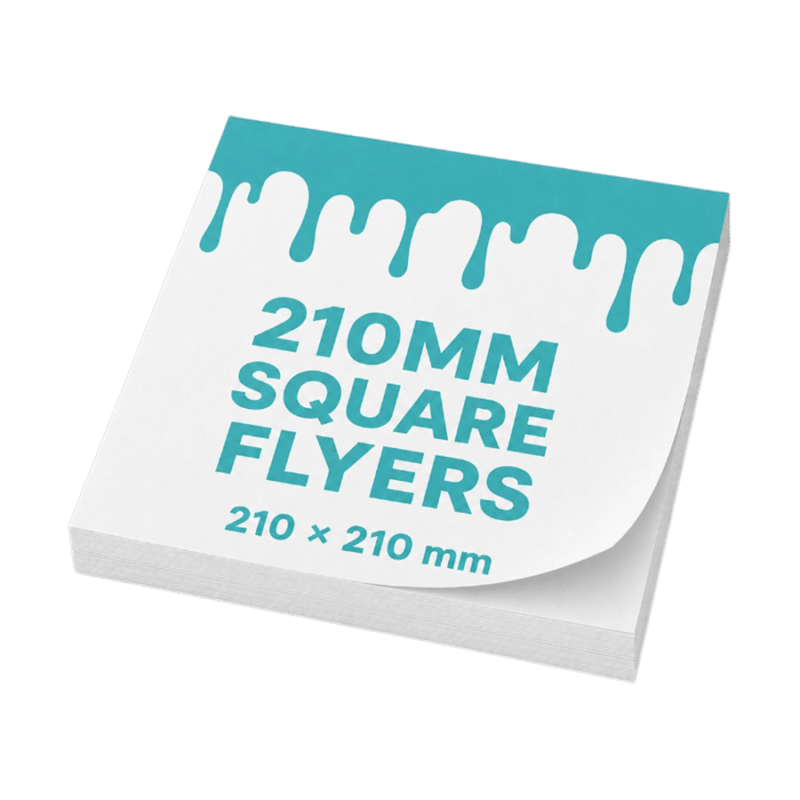
Square — 148mm and 210mm
Not an ISO size, which is exactly why it stands out in a stack of ISO-sized flyers doing the same thing everyone else’s is doing. Good for anything visual-led — food, product photography, event graphics — where the shape itself is part of the design rather than just a container for text.
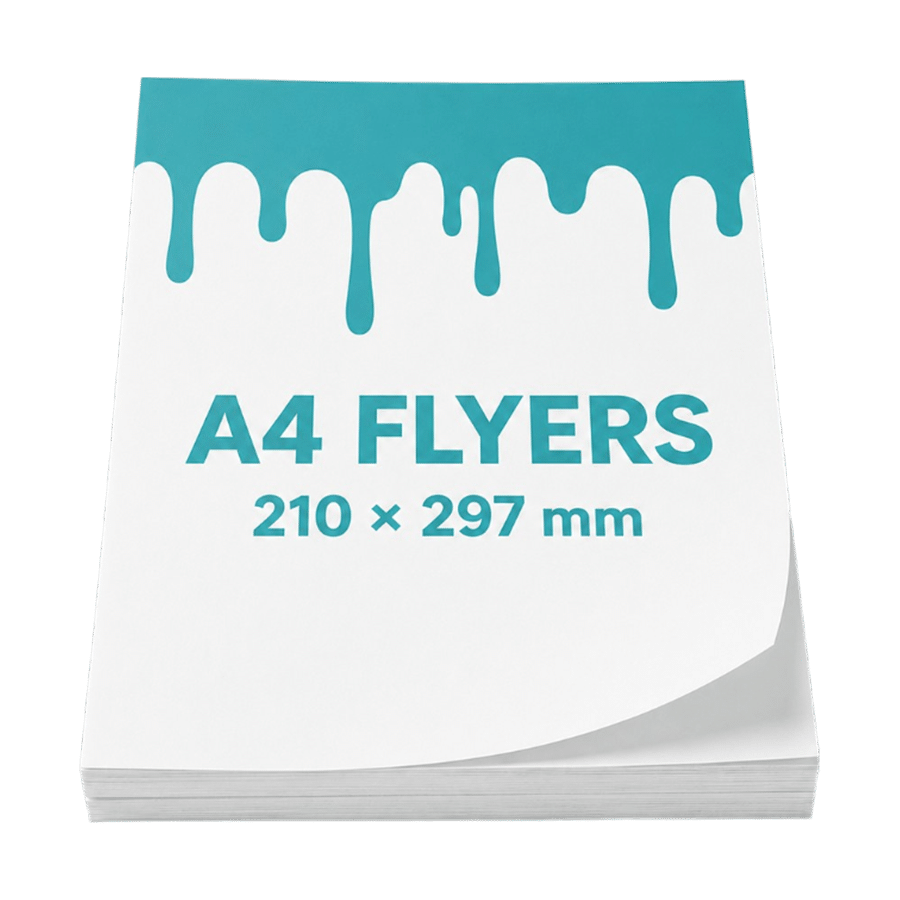
A4 — 210 × 297mm
A full sheet. Properly poster-adjacent at this point — think menus that live on a table rather than leave with the customer, information sheets, or anything that needs enough room for real detail without shrinking the type down to squint-territory.
A3 — 297 × 420mm
Poster size, full stop. This isn’t really a “hand it to someone” format any more — it’s a “stick it up and let it do the work” format. Shop windows, noticeboards, event spaces. If A3 is ending up in someone’s hand rather than on a wall, it’s probably the wrong size for the job.
So which one actually gets read?
The honest answer: the one that matches how it’s going to be encountered, not the one that feels the most impressive on the design screen. A DL through a letterbox outperforms an A4 through a letterbox, because it fits the letterbox mindset — quick, low-commitment, easy to glance at. An A5 in a customer’s hand outperforms an A7, because there’s actually room to say something. And an A3 on a wall beats literally anything smaller, because from six feet away, smaller flyers may as well be invisible.
Match the size to the moment it needs to work in, and the flyer does its job without you having to shout. Compare all our flyer sizes side by side, from A7 right up to A3, and build from whichever one actually fits the brief.